Lesson 2.3: Policy Benefits for Stakeholders
Description: In this lesson, you will explore the QCP’s policy benefits for different stakeholders – including better mobility, informed policy-making, educational planning, quality assurance, and capacity development across national and regional levels. We will also look at the QCP’s most relevant policy use cases.
By the end of this lesson, you will be able to:
- Describe the key policy benefits of the QCP for enhancing transparency, comparability, mobility, and quality assurance across African qualifications systems.
- Explain how stakeholders can use QCP data to inform policy-making, educational planning, and cross-border recognition.
- Recognise how QCP supports innovation and capacity development, empowering national agencies and promoting lifelong and flexible learning pathways.
Policy-Related Use Cases of QCP
In the following use cases we want to highlight some of the most common use-cases related to qualifications data and how the QCP helps address those.
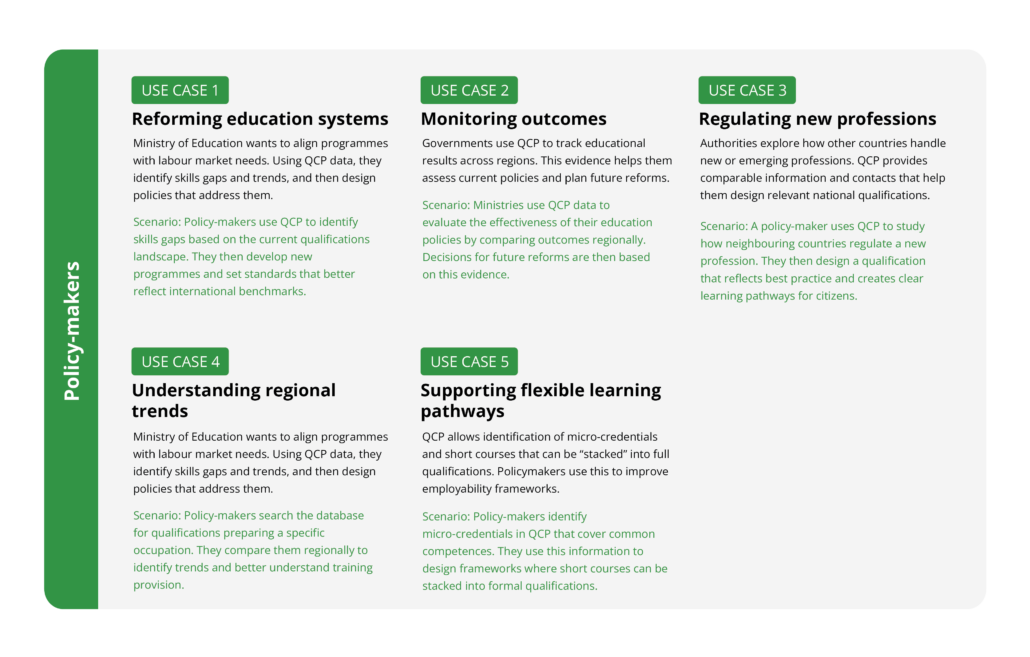
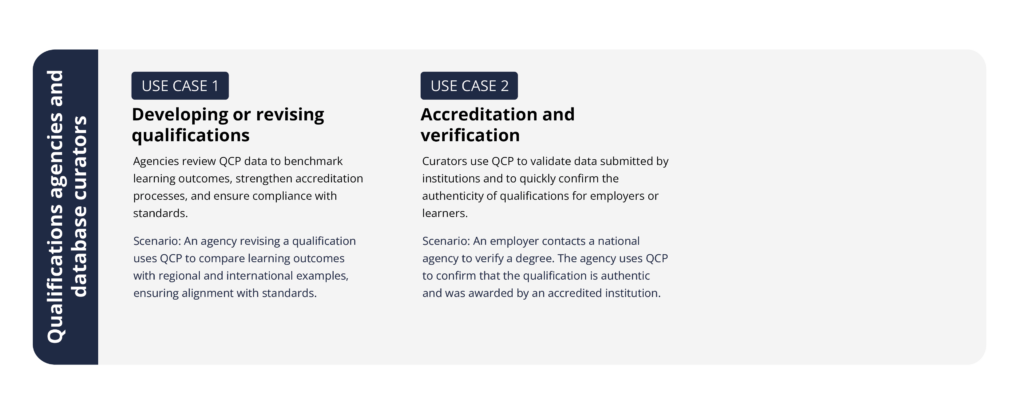
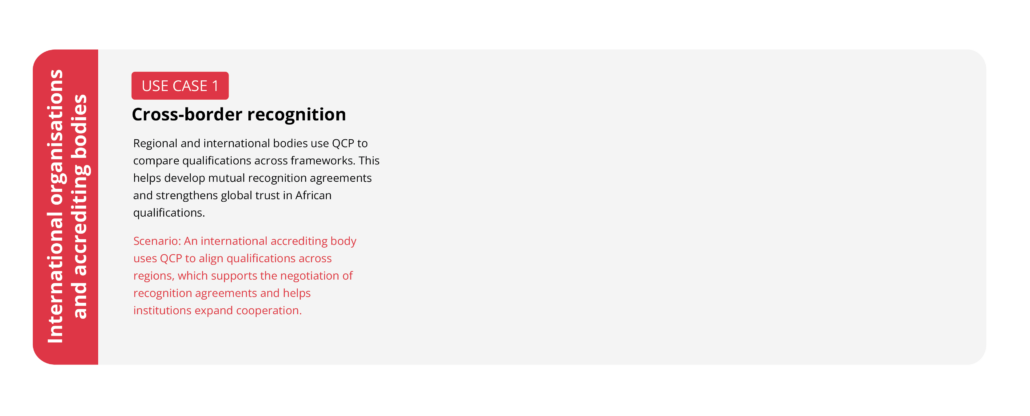
We hope this overview of common QCP use cases helps you understand how you will be using the QCP in your future work with qualifications data – both nationally and when collaborating with continental and international actors.
Apply it: reflection
“Which of the policy use cases above is most relevant to your national context right now? What QCP data would you need to access or prepare in order to act on it?”